

Reflections
What does access to justice look like in gender-based violence?
Dr Tessa Boyd-Caine, CEO, ANROWS
Estimated read time: 8 minutes
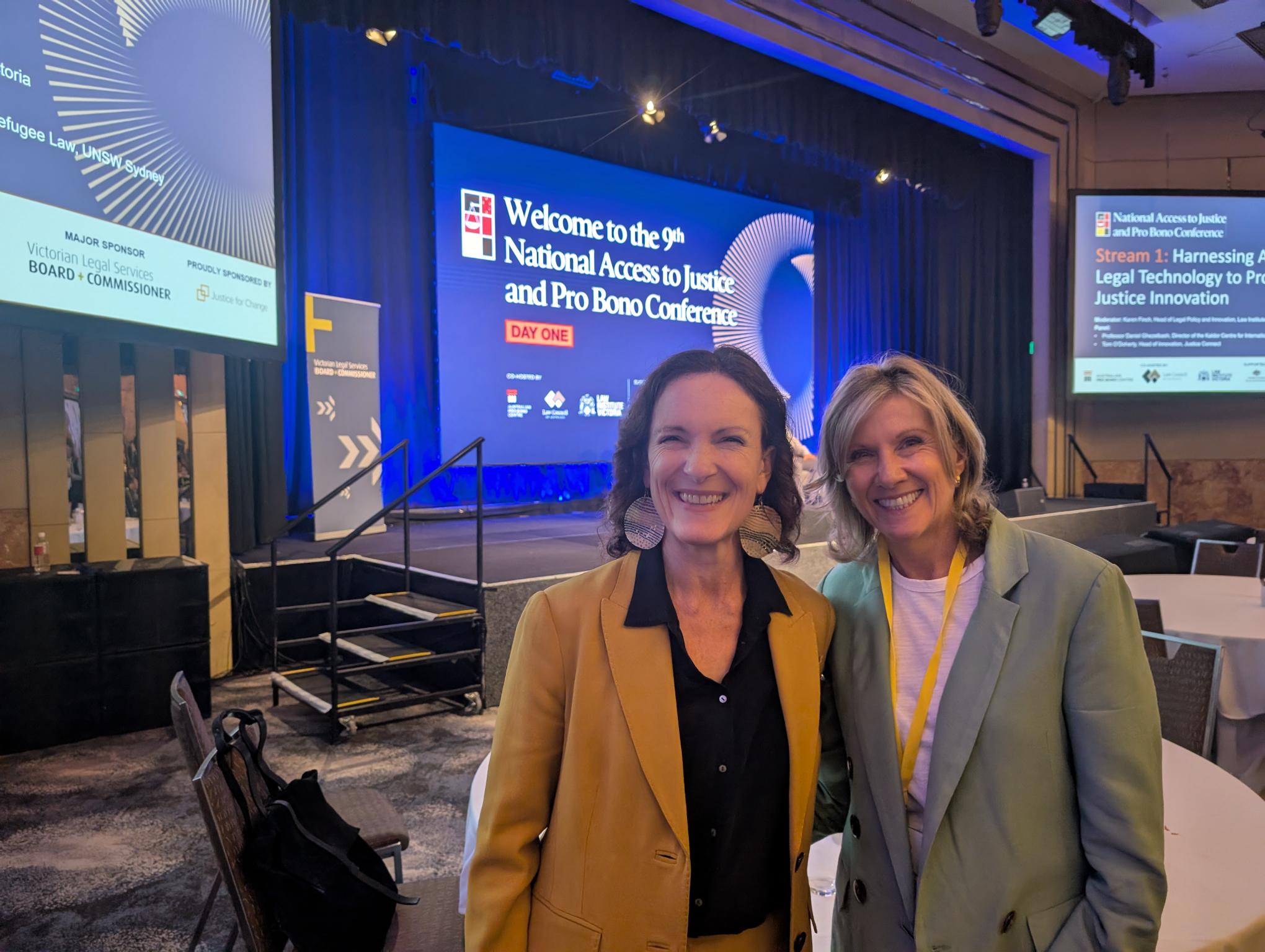
Last week, I had the pleasure of chairing the opening plenary at the sold-out National Access to Justice and Pro Bono Conference in Melbourne. With over 500 delegates, the conference brought together a broad range of legal assistance services and advocates to explore how justice systems can better serve communities.
For ANROWS, this was an opportunity to bring a transformative gendered lens to that conversation, and to reflect on what access to justice truly looks like when the stakes are safety, dignity, and lives.
Shifting the goalposts: Beyond access to lawyers
Legal access is more than the presence of a lawyer. It’s about systems that understand, recognise, and respond to people’s lived expertise.
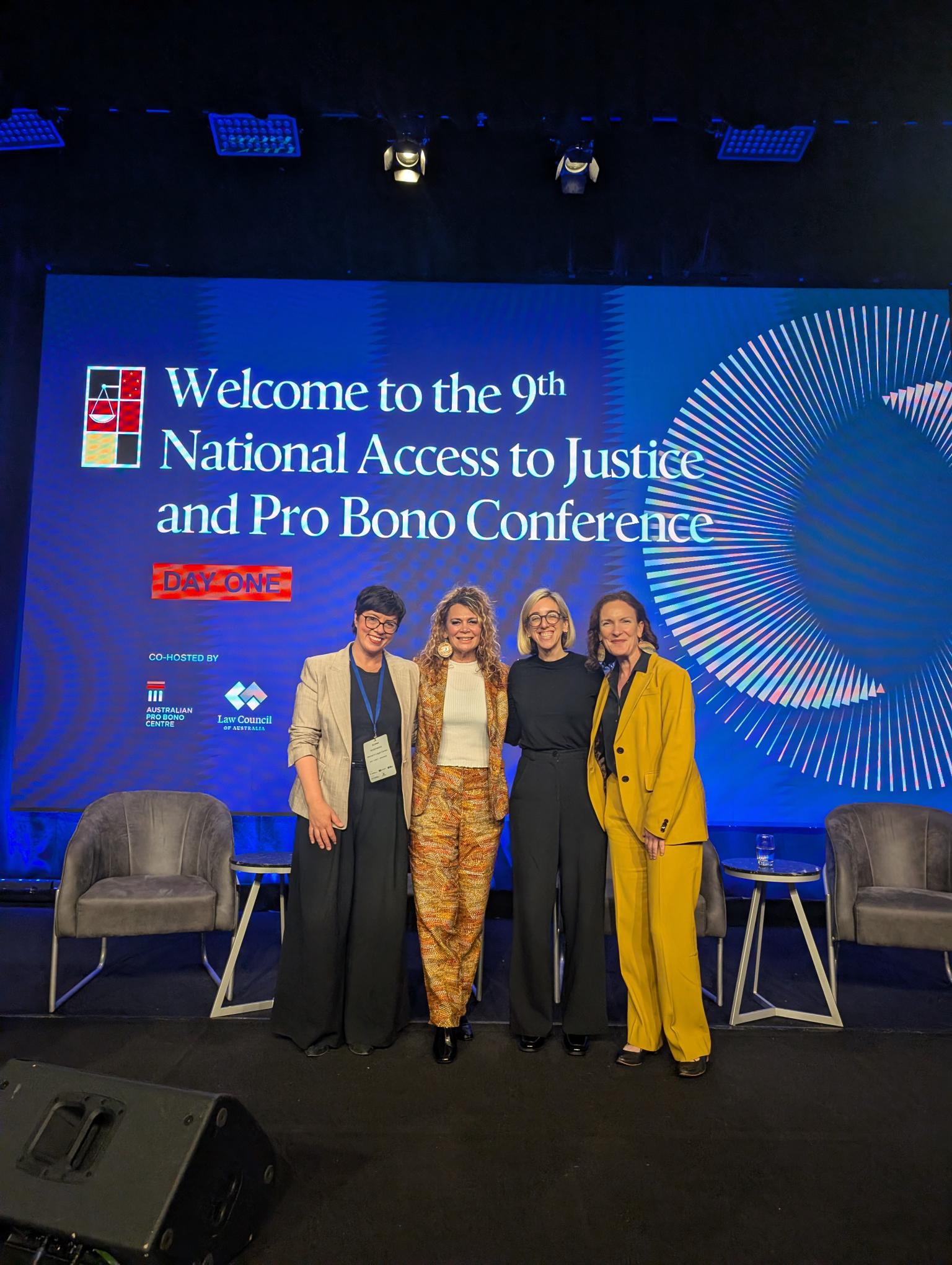
The panel I chaired, featuring Antoinette Braybrook (Djirra), Elena Rosenman (Women’s Legal Centre ACT), and Pia Birac (Legal Aid NSW), offered a powerful discussion on how legal systems must change to meet the needs of victim-survivors.
One of the most thought-provoking discussions was about the use of terms like trauma-informed. From ANROWS’ research, we know that understanding the role of trauma is essential for supporting recovery and for addressing accountability. However, naming trauma is not enough.
An example raised by the panel illustrated the tension: a practitioner sat on the phone for six hours with a woman in crisis, believing this would help with her trauma. However, during that time, she never actually addressed the woman’s legal needs or immediate safety. Good intentions, without skilled frameworks or accountability, can miss the mark.
Trauma-informed practice needs to include an effective, culturally safe, and timely approach that addresses the widespread impact and the role that violence plays in shaping a person’s experiences. Practitioners need to develop safe spaces to reduce and prevent further harm or re-traumatisation. Without frameworks to understand trauma’s complex and lasting impacts, they can miss opportunities to identify coping mechanisms, provide effective services, support engagement, or create holistic and meaningful safety support plans.
Structural racism in the justice system
This conversation also confronted how systemic racism distorts the experience of justice, particularly for Aboriginal and Torres Strait Islander women. We heard how Aboriginal women are not only more likely to experience violence, but are also more likely to be criminalised and disbelieved when they seek support and protection.
The call from our panel was clear: justice must reflect culture, community and lived expertise. That means embedding First Nations-led services, recognising the impact of intergenerational trauma, self-determination and transforming systems that have long upheld inequality.
The power of truth-telling
The morning’s opening session, featuring Travis Lovett, Rueben Berg, and Cindy Penrose, marked an historic moment. On the very day Victoria passed its legislation to establish Treaty negotiations, these leaders reflected on the role of truth-telling through the Yoorrook Justice Commission and the First Peoples’ Assembly of Victoria.
This insight resonates across both contexts: we all play a role in ensuring that our work respects Aboriginal and Torres Strait Islander peoples’s way of knowing, being and doing.
Whether you work in law, research, policy, or frontline support, access to justice means reimagining systems, not simply navigating them better.
For ANROWS, that means continuing to invest in evidence that:
- tracks what is working and where gaps remain;
- embeds cultural and trauma-informed approaches from the ground up;
- and supports systems change, not just service response.
A final reflection, one that I raised in my framing of the session to the conference organisers: how we describe violence matters.
There’s growing use of the word “epidemic” in public and political discussions about domestic, family and sexual violence. It reflects the scale of the problem, and the urgency. However, there are risks in medicalising something that stems from social norms, power, and inequality.
Violence is not a disease. It is a choice, shaped by systems and enabled by silence and power.
When we call it an “epidemic,” we risk stripping away the agency of those who choose to use violence, and we risk obscuring the role of institutions in perpetuating harm. We need language that conveys scale and accountability.
Whatever we call it, our job is the same: build systems that prevent violence, support safety, and uphold justice.
Media contact:
Emmagness Ruzvidzo,
Media and Communications Manager, ANROWS
E: Emmagness.Ruzvidzo@anrows.org.au
M: 0468 322 800
About ANROWS
Australia’s National Research Organisation for Women’s Safety (ANROWS) was established by the Commonwealth, state and territory governments under Australia’s first National Plan to Reduce Violence against Women and their Children (2010–2022). As an ongoing partner to the National Plan, ANROWS continues to build, strengthen and translate the evidence base that informs the current National Plan to End Violence against Women and Children (2022–2032).
With more than 150 research projects led, commissioned or contributed to, ANROWS delivers targeted evidence to inform practice, policy, and systems reform. We engage closely with victim-survivors, communities, service providers, governments and researchers to ensure our work reflects lived experience and supports collective action.
ANROWS is a not-for-profit company jointly funded by the Commonwealth and all state and territory governments. We are a registered harm prevention charity and deductible gift recipient, governed by the Australian Charities and Not-for-profits Commission (ACNC).