

Webinar: Create space for pilots and evaluations of community-led interventions
-
12:00 pm - 1:00 pm, Tuesday, 4th August 2026
-
AEST | Online via Zoom | Cost: Free
This is the final instalment of our webinar series unpacking the ways of working and ways of knowing set out in The Australian National Research Agenda to End Violence against Women and Children (ANRA) 2023–2028.
Funding has traditionally given preference to academic research, however, community-led research and evaluation play a vital role in identifying effective interventions for preventing and responding to domestic, family and sexual violence.
What is community-led research?
Community-led research means that the research is undertaken by people who identify as being part of the population that researchers want to understand.
Community members and/or organisations are involved in the whole research process, from setting the research question(s) to data collection, analysis and monitoring.
Join our webinar, where panellists will:
- Highlight the benefits and challenges of community-led research and evaluations
- Discuss power imbalances in research and the importance of enabling communities to shape the research that reflects them
- Discuss the significance of having community-based organisations and researchers to lead and inform the interventions and research
- Explore case studies that are examples of good practice
The panel discussion will be followed with a live Q&A. You can also submit questions ahead of time when you register.
This webinar will have live captions and will be recorded and uploaded to the ANROWS website and YouTube channel.
Who is this webinar for?
People involved in domestic, family and sexual violence research or evaluation work, including researchers, funders, practitioners, service providers and data custodians.
Event details
Date: Tuesday 4 August 2026
Time: 12:00 pm – 1:00 pm AEST
Location: Online via Zoom
Cost: Free
For enquiries, email events@anrows.org.au
Registration
Register to watch the webinar live
Register to receive the webinar recording
Speaker biographies
Panel facilitator: Dr Tessa Boyd-Caine (she/her), CEO at ANROWS

Dr Tessa Boyd-Caine is CEO of ANROWS, Australia’s national organisation for women’s and children’s safety research.
She leads ANROWS’ work to strengthen the evidence available to prevent and respond to domestic, family and sexual violence, and to support its use across policy, practice and community settings. This includes recognising the critical contribution of community-led research, lived expertise, practitioner knowledge and First Nations-led knowledge alongside academic research.
Trained as a criminologist and a graduate of the Australian Institute of Company Directors, Tessa has worked across health, criminal justice and human rights organisations in Australia and internationally. She was born and raised, and continues to live, on unceded Gadigal land in Sydney.
Connect with Tessa on LinkedIn
Panellist: Jade Parker (they/them), Team Leader – Sexual, Domestic and Family Violence Programs, ACON Health

Jade Parker (they/them) is the Team Leader – Sexual, Domestic and Family Violence Programs at ACON Health.
They lead a dedicated team delivering statewide health promotion initiatives to support LGBTQ+ communities across New South Wales.
Jade holds qualifications in criminology, is a proud non‑binary queer person with lived experience of SDFV, and they bring deep community insights and a strong intersectional queer and feminist lens to their leadership and advocacy work.
Connect with Jade on LinkedIn
Panellist: Dr Emily Wright (she/her), Research Officer, Queensland Aboriginal and Torres Strait Islander Child Protection Peak, Centre of Excellence (QATSICPP)

Dr Emily Wright is a Research Officer at the QATSICPP Centre of Excellence.
She has led projects exploring First Nations evidence, cultural parenting practices, and the healing needs of Aboriginal and Torres Strait Islander fathers and boys who have experienced domestic violence.
Emily completed her PhD at Griffith University, examining media portrayals of intimate partner homicide. She also holds a Bachelor of Laws and Bachelor of Criminology and Criminal Justice and previously worked in the university sector for eight years researching and teaching in criminology.
Emily is passionate about producing research that amplifies the voices of Aboriginal and Torres Strait Islander peoples and contributes to meaningful social change.
Connect with Emily on LinkedIn
Panellist: Jackie Kauli, PhD (she/her), Research, Evaluation and Strategic Officer, Queensland Program of Assistance to Survivors of Torture and Trauma (QPASTT)
She has experience collaborating with communities to undertake research that draws on local knowledge to shape strategies and prevention approaches addressing gender‑based violence.
As part of QPASTT, she contributes to a consortium delivering the Community Ally Network (CAN) project, a peer‑led, trauma‑informed initiative supporting culturally and linguistically diverse (CALD) communities in Queensland. Led by Women’s Health & Equality Queensland (WHEQ), CAN strengthens community‑based responses to domestic and family violence.
In her role, Jackie works with consortium teams to design culturally appropriate ways of documenting CALD community experiences and strengths and supports culturally responsive engagement and reflective approaches that inform robust, community grounded responses to women and families experiencing violence.
Connect with Jackie on LinkedIn

-
Thursday, 15th November 2018
-
Ground floor meeting room, Crawford House, Hunter Street, Lismore

-
Thursday, 18th October 2018
-
Technology Park Function Centre, Bentley, WA
-
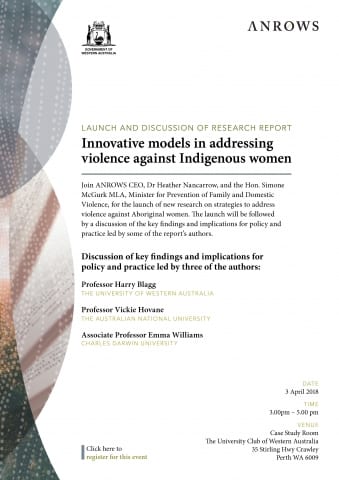
Tuesday, 3rd April 2018
-
Case Study Room, The University Club of Western Australia